Case Study: How Sneha, a Travel Agent from Surat, Builds Stronger Customer Relationships with Flyshop.in
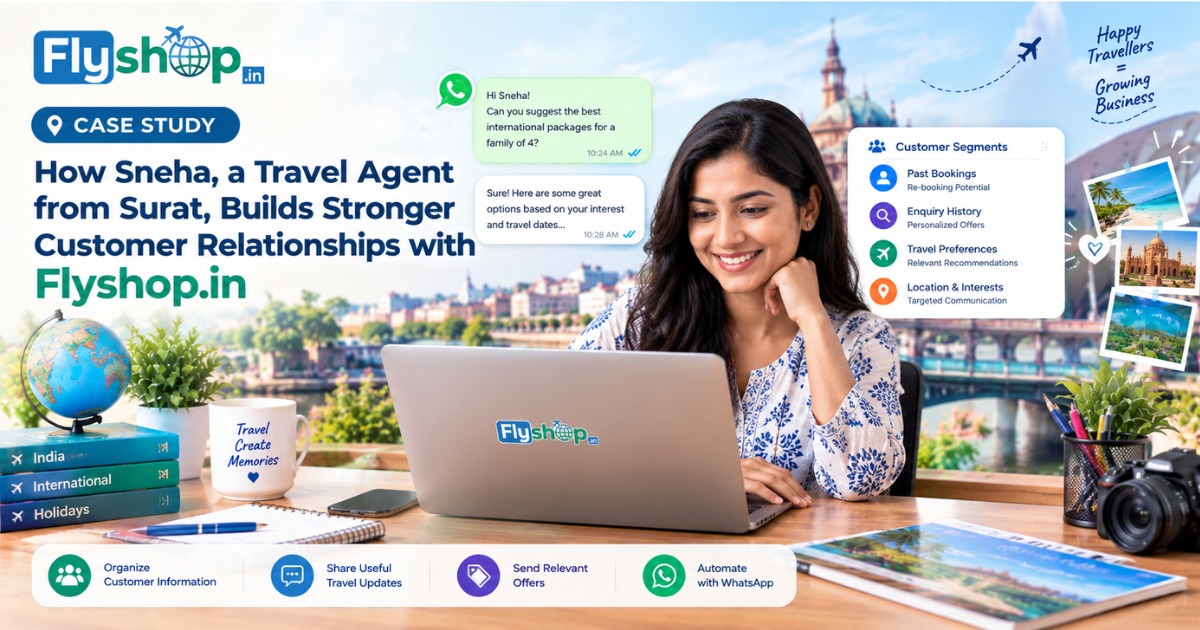
Meet Sneha, a Travel Agent from Surat
For a travel business, growth does not always have to come from finding new customers. Previous customers can also become a valuable source of future bookings when they receive good service, relevant information, and timely communication.
Meet Sneha, a travel agent from Surat who helps customers explore travel options and plan their trips. Like many travel agents, she understands the importance of generating new enquiries. However, she also realizes that focusing exclusively on new prospects can mean overlooking people who have already booked a trip or shown interest in her services.
A customer who booked a family holiday last year might be planning another vacation. Someone who previously enquired about an international tour may now be ready to explore available options. Another traveller might appreciate receiving useful seasonal travel information before planning their next trip.
Sneha wants to build stronger relationships with these customers rather than relying entirely on fresh enquiries. She decides to organize customer information, stay connected through useful updates, share relevant offers, and explore WhatsApp automation for routine communication.
Her goal is simple: create a more consistent and customer-focused process for maintaining relationships beyond the first enquiry or booking.
The Challenge: Staying Connected After the First Interaction
Travel decisions often happen at different times throughout the year. Customers may book a holiday during school vacations, plan an international trip several months in advance, or wait until their schedules and budgets allow them to travel.
This means that a customer who does not need a trip today may still become a valuable prospect in the future.
However, maintaining relationships with previous customers requires more than keeping their phone numbers in a contact list.
Travel agents need to remember relevant preferences, understand previous interactions, and communicate information that is useful to each customer. When customer details are scattered across messages, spreadsheets, or other records, managing these relationships can become difficult.
Sneha identifies three key challenges:
- Disorganized customer information: Remembering previous destinations, preferences, and enquiry details becomes harder as her customer base grows.
- Inconsistent communication: Without a defined process, she may miss opportunities to reconnect with previous customers at appropriate times.
- Irrelevant promotional messages: Sending the same offer to everyone may not match their travel interests and could reduce engagement.
Sneha realizes that customer retention requires a more thoughtful approach. Instead of simply increasing the number of messages she sends, she wants to make every interaction more relevant and useful.
Step 1: Organize Customer Information and Preferences
Sneha begins by organizing the customer information she already has permission to maintain and use for appropriate business purposes.
She focuses on details that can help her provide a better customer experience, such as previous travel interests, destinations discussed, group size, and relevant enquiry history.
For example, a customer who previously enquired about a family holiday may have different preferences from someone interested in international travel. A traveller who asked about a particular destination may appreciate receiving relevant information when suitable options become available.
By keeping these details organized, Sneha can better understand the context of earlier conversations instead of treating every interaction as a completely new enquiry.
She also recognizes the importance of accuracy. Customer preferences can change, and information from an old conversation should not automatically be treated as current.
Privacy is equally important. Sneha uses appropriate safeguards for customer information, limits access to people who need it for their work, and respects customer preferences about communication. She also considers applicable privacy and data-protection requirements when collecting, storing, and using customer details.
This creates a more reliable foundation for future interactions.
The key lesson: Organized customer information can help travel agents provide more relevant service, but it should be accurate, appropriately protected, and used responsibly.
Step 2: Stay Connected Through Useful Travel Updates
Once her customer information is better organized, Sneha considers how to maintain contact with previous customers.
Instead of waiting for them to submit another enquiry, she develops a plan to share useful travel-related updates with customers who have agreed to receive them.
These updates could include seasonal travel inspiration, information about relevant destinations, planning tips, or announcements about services that match their interests.
For example, a customer who previously explored a summer family holiday might appreciate an update about suitable travel options before the next holiday season. Someone interested in international destinations may find destination-specific information more useful than a general promotional message.
Sneha understands that communication should offer value rather than exist simply to remind customers that her travel agency is available.
She also considers frequency. Too many messages can overwhelm customers, while communication that is too infrequent may make it harder to maintain a meaningful relationship.
Her approach is to share updates when there is a relevant reason to contact someone, respect communication preferences, and provide an appropriate way for recipients to stop receiving promotional messages.
WhatsApp can support these interactions when used through an appropriate business setup and in accordance with applicable messaging rules.
The key lesson: Consistent customer engagement does not mean sending messages every day. It means sharing useful information at appropriate times with people who want to receive it.
Step 3: Share Offers That Match Customer Interests
Sneha then focuses on making her offers more relevant.
Rather than sending every promotion to her entire customer list, she considers which customers might genuinely benefit from a particular service.
For example, customers who previously enquired about domestic holidays may be interested in relevant domestic travel options. Those who expressed interest in international trips may prefer information about destinations abroad.
Similarly, customers who previously discussed group travel may need different recommendations from people planning trips for two.
This approach helps Sneha connect her communication with what she knows about each customer's interests, while avoiding assumptions based on outdated information.
She also makes sure that offers are communicated clearly. Customers should be able to understand what is being promoted, what information is available, and how they can enquire further.
If an offer depends on travel dates, availability, or specific conditions, those details should be explained accurately.
Sneha recognizes that a relevant offer does not guarantee a booking. Customers may have different budgets, schedules, or priorities. Her aim is to make it easier for interested customers to discover suitable options without feeling pressured.
Over time, she can observe which types of updates generate meaningful responses and use those observations to improve future communication.
The key lesson: Relevant offers are more useful than generic promotions. Understanding customer interests helps travel agents communicate with greater purpose.
Step 4: Organize Routine Communication with WhatsApp Automation
As Sneha works on maintaining customer relationships, she also considers how to manage routine communication more efficiently.
Manually sending every update, organizing every reminder, and managing every customer interaction can become time-consuming as her customer base grows.
She therefore explores suitable WhatsApp automation workflows that could support her process.
Depending on the platform, configuration, and available features, automation may help organize approved communication workflows, manage routine responses, or schedule eligible messages for customers who have agreed to receive them.
For example, Sneha could organize a process for sharing a relevant seasonal update with an appropriate customer segment. She could also prepare standard responses to common questions about her travel services.
However, she understands that automation must be used carefully. It should not result in irrelevant messages, excessive contact, or communication that ignores customer preferences.
She also keeps personal assistance available when customers ask specific questions or need help choosing between travel options.
By combining organized customer information with appropriate automation, Sneha can develop a more manageable communication process without losing the personal touch that matters in travel services.
The key lesson: WhatsApp automation can help organize repetitive communication, but thoughtful planning and customer-focused service remain essential.
The Outcome: A More Organized Customer Engagement Process
By organizing customer details, sharing useful updates, matching offers to customer interests, and exploring suitable automation workflows, Sneha creates a clearer approach to maintaining customer relationships.
Her process focuses on three important priorities:
- Better organization: Relevant customer information and previous interactions are easier to review.
- More meaningful engagement: Updates and offers are aligned with customer interests wherever reliable information is available.
- More consistent communication: Suitable workflows help her organize routine interactions while preserving personal assistance.
This gives Sneha a structured way to reconnect with previous customers and identify potential future business opportunities.
However, stronger relationships do not automatically translate into repeat bookings. Results depend on the quality of service, relevance of communication, customer demand, pricing, and the travel options available.
What Other Travel Agents Can Learn from Sneha
Sneha's journey offers five useful lessons for travel businesses looking to improve customer engagement.
1. Treat previous customers as relationships, not just contacts. Remembering relevant preferences and past interactions can help make future conversations more useful.
Keep customer information organized. Maintain accurate records and apply appropriate privacy safeguards.
Share useful updates. Give customers a reason to engage by communicating information that matches their interests.
Use automation thoughtfully. Organize routine communication without replacing personal support or ignoring customer preferences.
5. Focus on long-term trust. Good service, relevant recommendations, and respectful communication create a stronger foundation for repeat business than message volume alone.
Conclusion: Build Relationships Beyond the First Booking
For a travel agent like Sneha, customer engagement does not end when an enquiry is answered or a booking is completed. Previous customers may have new travel plans in the future, but maintaining those relationships requires consistent attention and relevant communication.
By organizing customer information, sharing useful updates, recommending suitable offers, and exploring WhatsApp automation, Sneha creates a more structured approach to staying connected with her customers.
The bigger lesson is that customer retention is not simply about sending more messages. It is about understanding customer needs, providing helpful service, respecting communication preferences, and remaining available when travellers are ready to plan their next trip.
Want to improve customer engagement for your travel business with Flyshop.in?
Build a more organized approach to customer communication and explore ways to stay connected with previous customers.
Reply RETENTION to learn more.