Case Study: How Priya, a Travel Agent from Jaipur, Improves Customer Enquiries with Flyshop.in
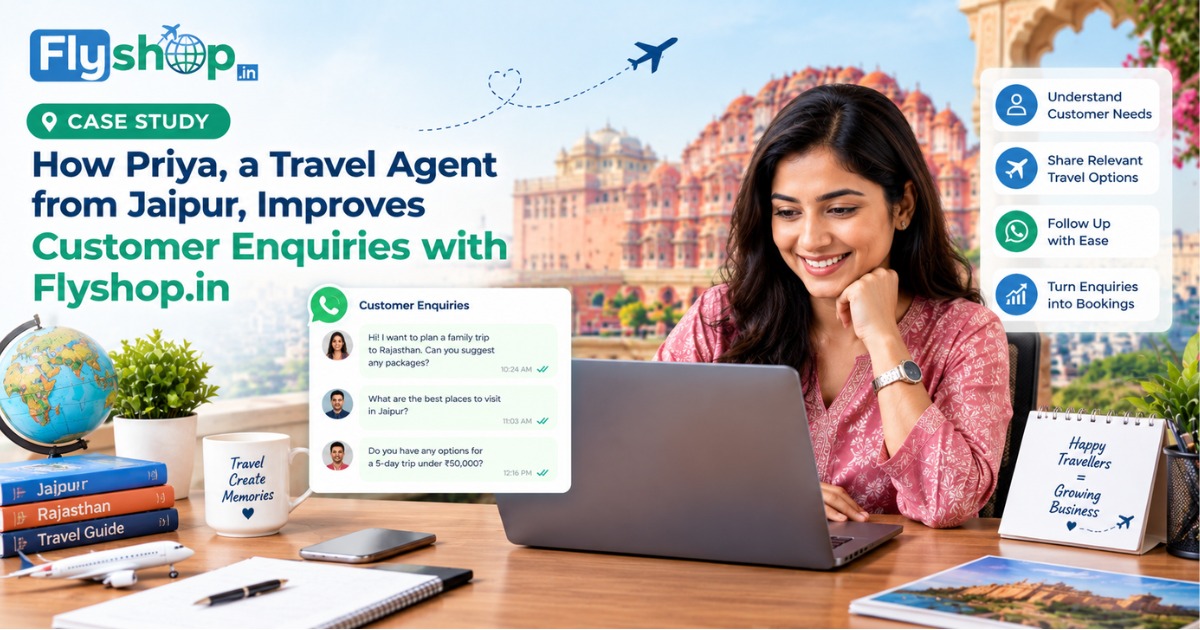
Meet Priya, a Travel Agent from Jaipur
For a travel agent, receiving customer enquiries is only the beginning of the sales journey. Travellers often need time to compare destinations, explore holiday packages, understand costs, and discuss their plans before making a booking decision.
Meet Priya, a travel agent from Jaipur who regularly receives enquiries from people interested in planning their trips. Although these enquiries create opportunities for her business, she notices that many customers are not ready to book immediately.
Some travellers are still deciding where to go. Others have questions about their budgets, travel dates, or available options. A few may express interest but need additional information before moving forward.
Priya understands that simply sharing a package or sending a promotional message is not always enough to help someone make a decision. She wants to understand what customers actually need and provide information that is relevant to their travel plans.
To improve the customer experience, Priya focuses on organizing her enquiry process, exploring suitable travel options through available tools, and maintaining thoughtful communication with interested travellers.
The Challenge: Turning Travel Enquiries into Meaningful Conversations
Travel planning is a personal decision. Different customers have different expectations, budgets, schedules, and preferences.
For example, a family planning a summer holiday may prioritize comfortable accommodation and activities for children. A couple planning a romantic getaway may prefer a completely different destination and experience. Meanwhile, a group of friends may be more concerned about affordability and adventure activities.
If Priya shares the same package with every customer, it may not match their individual requirements.
Similarly, if she focuses only on providing initial information, she may miss opportunities to answer follow-up questions and help customers understand their choices.
Priya identifies three important challenges:
- Understanding customer requirements: She needs to know what each traveller is looking for before suggesting suitable options.
- Providing relevant information: Customers need choices that match their travel dates, destination preferences, budget, and group size.
- Maintaining meaningful follow-ups: Interested customers may need additional guidance before they feel comfortable making a booking decision.
Rather than treating every enquiry as an immediate sale, Priya decides to focus on the complete customer journey.
Step 1: Understand Each Customer's Travel Needs
Priya begins by asking customers a few essential questions before recommending travel options.
She focuses on four important details: travel dates, preferred destination, budget, and group size.
These questions help her understand the customer's situation and narrow down the available choices.
For instance, a customer planning a trip for two people with a limited budget may need different recommendations from a family travelling with children. Likewise, a customer with fixed travel dates may have different options from someone whose schedule is flexible.
Priya uses these details to understand what matters most to each traveller.
She may also ask additional questions when necessary, such as whether customers prefer a relaxing holiday, sightseeing, adventure activities, or a particular type of accommodation.
This conversation helps her avoid making assumptions about customer preferences.
Instead of immediately presenting a long list of packages, she can focus on options that are more relevant to the customer's requirements.
It also gives customers an opportunity to explain their expectations and ask questions from the beginning.
The key lesson: Before recommending a travel package, understand the traveller. A few well-chosen questions can make the conversation more relevant and help both sides use their time effectively.
Step 2: Share Suitable Travel Options Using Available Tools
Once Priya understands a customer's requirements, she begins exploring suitable travel options.
Using the available booking tools and supplier options through her travel business setup, she can review choices that may fit the customer's preferences.
The objective is not to present every available package. It is to help the customer explore relevant possibilities.
For example, if a customer is planning a family holiday within a specific budget, Priya can focus on options that align with the family's travel dates, destination preferences, and group size.
If another customer is looking for a short weekend trip, she can explore options that better suit a shorter itinerary.
Priya also recognizes the importance of explaining the differences between alternatives. Customers may need to understand what is included, how the options compare, and whether the proposed arrangements fit their expectations.
Where applicable, she can guide customers through the relevant booking information available to her and clarify what they should consider before proceeding.
Flyshop.in provides travel agents with an online business platform, while the specific booking tools, inventory, and supplier options available depend on the agent's setup.
By organizing her recommendations around customer needs, Priya makes the decision-making process easier to navigate.
The key lesson: Relevant options are more useful than an overwhelming list. Focus on matching recommendations to the customer's requirements instead of simply sharing as many packages as possible.
Step 3: Follow Up Thoughtfully with Interested Customers
After sharing suitable options, Priya understands that not every customer will make an immediate booking.
Some travellers may need time to compare packages. Others may want to discuss the budget with family members or ask additional questions before confirming their plans.
Priya therefore treats follow-ups as a continuation of the conversation rather than an opportunity to send the same message repeatedly.
She pays attention to what each customer has already discussed and identifies the next useful step.
For example, a customer who has received a holiday package may need clarification about its inclusions. Another customer may want to revisit the available options after reviewing the budget.
Priya can follow up with information that relates to the customer's original enquiry instead of sending a generic message to everyone.
She also considers the customer's level of interest and preferred timing. A traveller who is actively comparing options may need a different response from someone who has only made an initial enquiry.
This approach helps Priya keep communication relevant and respectful.
When using any follow-up tools, she can organize her process around suitable reminders or configured communication workflows, where available. However, the content of each message should still reflect the customer's needs and comply with applicable messaging requirements.
The key lesson: Follow up with context. A relevant answer or helpful reminder can be more valuable than repeated promotional messages that do not address the customer's concerns.
Step 4: Offer Personal Assistance Before the Booking Decision
Even after reviewing suitable options, customers may have questions that require individual attention.
A traveller might be unsure which destination best matches their expectations. Another customer may need clarification about the differences between two packages. Someone else may have specific requirements that cannot be addressed through standard information alone.
Priya makes personal assistance an important part of her process.
She encourages customers to ask questions, explains the available choices, and helps them understand the information needed to make a decision.
For example, when a customer is comparing two holiday packages, Priya can explain the relevant differences based on the information available to her. If a customer has a special request, she can check the applicable options before making a recommendation.
She also avoids assuming that every customer who delays booking has lost interest. Sometimes, a traveller simply needs more clarity before moving forward.
By remaining available to help, Priya can build trust and provide a more supportive experience.
The aim is not to pressure customers into booking. It is to help them make informed decisions that suit their travel plans.
The key lesson: Personal assistance matters, especially when customers face uncertainty. Helpful guidance can make the booking journey clearer and more comfortable.
The Outcome: A Clearer Process for Handling Travel Enquiries
By understanding customer needs, sharing relevant options, following up thoughtfully, and offering personal assistance, Priya creates a more organized approach to managing travel enquiries.
Instead of focusing only on the number of enquiries she receives, she pays greater attention to the quality of each conversation.
Her process helps her focus on three practical priorities:
- Better understanding: She gathers essential details before recommending travel options.
- More relevant communication: Her recommendations and follow-ups relate to each customer's requirements.
- Improved customer guidance: Travellers have opportunities to ask questions and understand their options before deciding.
This approach creates a clearer process for handling enquiries and supporting informed booking decisions. Actual improvements in conversion rates or revenue would depend on factors such as customer demand, pricing, available inventory, and the quality of service.
What Other Travel Agents Can Learn from Priya
Priya's journey offers several useful lessons for travel businesses that want to improve their enquiry management process.
Ask before you recommend. Understand the customer's destination, dates, budget, and group size before suggesting options.
Focus on relevance. Share choices that match the customer's needs rather than overwhelming them with unrelated packages.
Make follow-ups useful. Address the customer's questions and previous discussions instead of sending identical messages to everyone.
Make personal assistance accessible. Help customers understand their options and resolve uncertainties before they decide.
5. Measure conversation quality, not just enquiry volume. Review whether enquiries are relevant, whether customers engage with the information provided, and where they need additional support.
Conclusion: Better Conversations Can Support Better Booking Decisions
Priya's experience highlights an important principle for travel agents: generating enquiries is only one part of growing a travel business.
Understanding customer requirements, presenting relevant travel options, maintaining thoughtful communication, and offering personal guidance can make the enquiry process more useful for both the agent and the traveller.
With a structured approach and the right tools, travel agents can focus on helping customers find options that match their needs rather than simply trying to process more enquiries.
Want to improve your travel enquiry process with Flyshop.in?
Focus on meaningful conversations, relevant travel options, and customer-focused follow-ups.
Reply CONVERT to learn more.