Case Study: How Nagesh, a Travel Agent from Delhi, Organizes Customer Follow-Ups with WhatsApp Automation
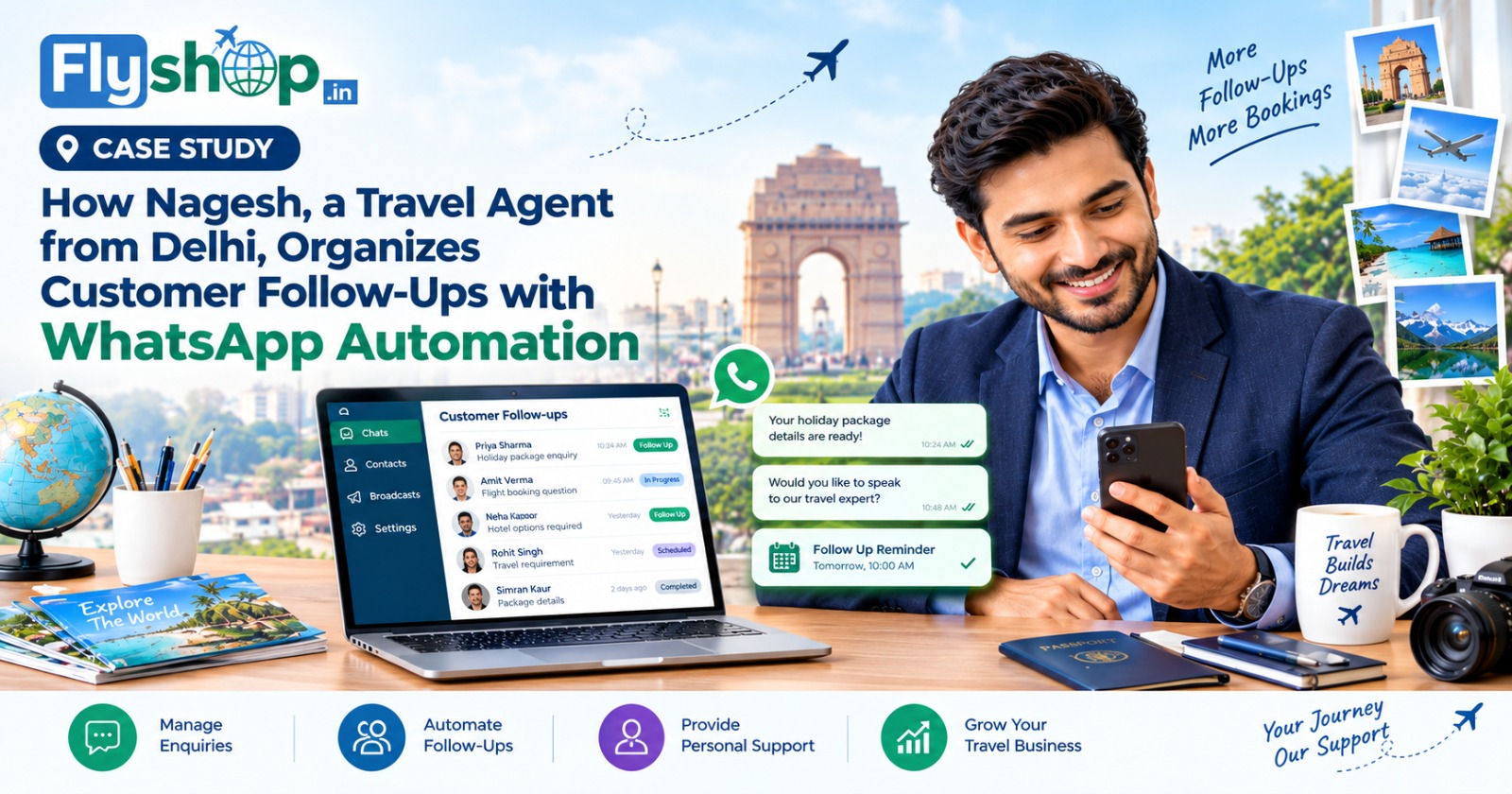
Meet Nagesh, a Travel Agent from Delhi
Running a travel agency involves much more than helping customers book flights, hotels, and holiday packages. Travel agents must also respond to enquiries, answer questions, share travel information, and follow up with potential customers who are still deciding.
Meet Nagesh, a travel agent from Delhi who receives enquiries from people interested in travel services. While these enquiries present opportunities to grow his business, Nagesh sometimes struggles to follow up with everyone on time.
Some customers need additional information before making a decision. Others ask similar questions about packages, bookings, or travel arrangements. Managing every conversation manually can become difficult, especially when multiple customers expect timely responses.
Nagesh realizes that he needs a more organized communication process. Instead of handling every routine interaction individually, he decides to explore how WhatsApp automation can help him manage customer communication while keeping personal assistance available when needed.
The Challenge: Managing Multiple Customer Enquiries
For Nagesh, the main challenge is not simply receiving enquiries. It is maintaining consistent communication after a potential customer shows interest.
Imagine a customer asking about a holiday package in the morning. Another customer wants to know about booking procedures, while a third is waiting for additional details before confirming a trip.
When several conversations happen simultaneously, it becomes harder to remember who needs a response, which customer requires a follow-up, and what information has already been shared.
Delays in communication can leave customers waiting and make it more difficult to maintain their interest.
Nagesh identifies three areas that need improvement:
- Repeated questions: Customers frequently ask similar questions about travel services and packages.
- Missed follow-ups: Remembering to contact every interested customer at the right time can be challenging.
- Limited time: Routine conversations consume time that Nagesh could otherwise spend assisting customers with more specific travel requirements.
He decides to organize these activities instead of relying entirely on manual communication.
Step 1: Identify Common Customer Questions
Before introducing automation, Nagesh begins by understanding the conversations he handles regularly.
He reviews the types of questions customers commonly ask when enquiring about travel services. These may include questions about holiday packages, available services, booking procedures, travel requirements, and the next steps after submitting an enquiry.
The purpose is to identify which conversations follow a predictable pattern.
For example, if multiple customers ask how to enquire about a holiday package, Nagesh can prepare a clear and consistent response explaining the process. Similarly, frequently requested information can be organized so that it is easier to share when needed.
This step helps Nagesh distinguish between routine questions and enquiries that require individual attention.
Not every customer has the same requirements. Someone looking for a family holiday may need different guidance from a customer planning a business trip. Nagesh therefore focuses on organizing common information without treating every conversation identically.
The key lesson: Effective WhatsApp automation starts with understanding the communication process. Identifying repetitive questions helps a travel agent decide where automation may be useful.
Step 2: Explore WhatsApp Automation for Routine Responses
After identifying common questions, Nagesh explores how WhatsApp automation could support his communication workflow.
Depending on the platform and configuration, WhatsApp automation can help businesses respond to common enquiries, guide customers through predefined conversation flows, and share relevant information without requiring a manual response to every routine question.
Nagesh considers which parts of his communication process are suitable for automation.
For example, a configured conversation flow could help a customer navigate basic information about travel services or understand what details to provide when submitting an enquiry. Routine responses could also help customers receive consistent information about the next steps.
This approach can make everyday communication more structured.
However, Nagesh understands that automation should not mean sending irrelevant messages to every customer. Responses need to match the customer's question and the purpose of the conversation. The system must also be configured appropriately for the workflows he wants to support.
By starting with a few common interactions, Nagesh can explore automation without attempting to change his entire customer communication process at once.
The key lesson: Automate predictable tasks first. A focused setup is easier to manage and refine than trying to automate every possible customer conversation immediately.
Step 3: Create a Consistent Customer Follow-Up Process
Answering the first enquiry is only one part of the customer journey. Many travellers need time to compare options, discuss plans with family members, review budgets, or gather additional information before making a booking decision.
Nagesh recognizes that interested customers may need further communication after their initial enquiry.
To address this, he creates a more structured follow-up process.
First, he identifies customers who have expressed genuine interest and determines what kind of follow-up is appropriate. Next, he organizes the information needed to continue each conversation, such as the package being discussed or the customer's outstanding questions.
Where suitable and supported by the configured system, WhatsApp automation can assist with scheduled follow-up messages or predefined reminders. Nagesh can use these capabilities to help maintain communication with interested customers rather than depending entirely on memory.
For example, a customer who has requested details about a holiday package may need a relevant follow-up after receiving the information. The message should relate to the customer's enquiry and offer a useful next step instead of simply repeating a promotional pitch.
Nagesh also recognizes the importance of timing and relevance. Excessive messages can frustrate customers, so follow-ups should be appropriate, respectful, and consistent with customer preferences and applicable messaging requirements.
With a defined process, Nagesh has a clearer way to manage ongoing conversations.
The key lesson: Consistent follow-ups can help travel agents maintain contact with interested customers, but the quality and relevance of each interaction matter just as much as its timing.
Step 4: Keep Personal Support Available for Important Enquiries
Although Nagesh wants to organize routine communication, he knows that travel planning often involves individual requirements.
A customer may need help comparing destinations, understanding a complicated itinerary, discussing special arrangements, or resolving a booking-related concern. These conversations require more than a standard automated response.
Nagesh therefore keeps personal support as an important part of his communication strategy.
Routine questions can be handled through suitable configured responses, while more complex enquiries are directed to him or the appropriate team member.
For example, if a customer asks a question that falls outside a predefined conversation flow, Nagesh can step in and provide a more specific answer. If a traveller needs assistance choosing between different packages, personal guidance can help clarify their requirements.
This combination allows Nagesh to use automation as a support system rather than a replacement for customer service.
Customers can receive help with common interactions while still having a way to reach a person when their situation requires additional attention.
The key lesson: Automation can organize repetitive communication, but personal assistance remains essential for building relationships and addressing individual customer needs.
The Outcome: A More Structured Communication Process
By identifying common questions, exploring WhatsApp automation, organizing follow-ups, and retaining personal support, Nagesh develops a more structured approach to managing customer communication.
Instead of treating every conversation as an entirely separate task, he begins distinguishing between routine interactions and enquiries that require individual attention.
His improved process focuses on three practical objectives:
- Better organization: Common questions and responses are easier to identify and manage.
- More consistent follow-ups: Interested customers can be handled through a defined communication process.
- Personalized assistance: Complex questions and specific travel requirements still receive individual attention.
The outcome is a clearer workflow for managing routine communication and customer follow-ups. Actual improvements in response times, bookings, or revenue would depend on implementation, customer behaviour, and how effectively the process is maintained.
What Other Travel Agents Can Learn from Nagesh
Nagesh's journey highlights several useful lessons for travel businesses looking to improve their WhatsApp communication.
1. Start with your biggest communication problem. Identify whether repeated questions, delayed responses, or inconsistent follow-ups consume the most time.
Organize before automating. Prepare clear responses and define the customer journey before configuring automated conversations.
3. Follow up with a purpose. Messages should help customers move forward with their enquiries rather than overwhelm them with repeated promotions.
4. Keep the human touch. Travel decisions often involve budgets, preferences, and special requirements. Make personal assistance available when customers need it.
5. Review and improve your process. Regularly check customer responses and identify where the communication workflow could be clearer or more useful.
Conclusion: Make Customer Communication Easier to Manage
For a travel agent like Nagesh, customer communication does not end when an enquiry arrives. Responding to questions, staying in touch with interested travellers, and providing the right support are all important parts of the customer journey.
WhatsApp automation can help organize suitable routine tasks and create a more consistent follow-up process. When combined with relevant communication and personal assistance, it can support a more manageable customer service workflow.
The goal is not to automate every conversation. It is to make routine communication easier to handle so that travel agents can focus their attention where it matters most.
Want to streamline customer communication for your travel business?
Explore how WhatsApp automation can support your enquiry management and follow-up process.
Reply to WHATSAPP to learn more.