How Digital Platforms Are Breaking Barriers for Travel Businesses in India
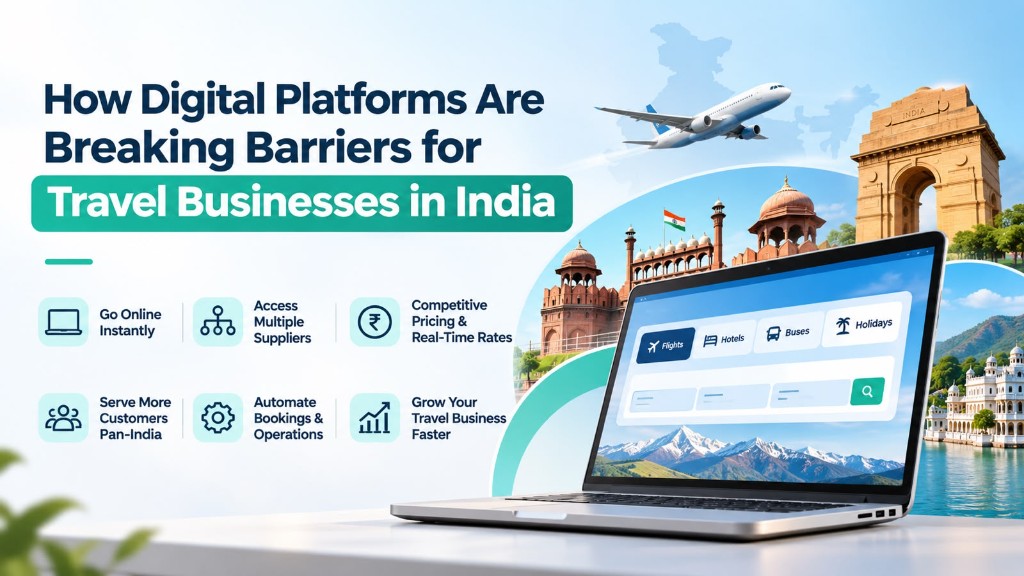
Introduction: The Digital Transformation of the Travel Industry
The travel industry has undergone a significant transformation over the past decade. With the growing adoption of digital technology, the way people plan, book and experience travel has changed considerably. However, this transformation is not limited to travellers. It is also creating new opportunities for travel agents, independent consultants, distributors and small travel businesses.
Earlier, running a travel business often required multiple supplier connections, extensive paperwork, manual booking processes and considerable operational resources. Today, digital platforms are simplifying these processes by bringing essential travel services together in one accessible digital environment.
As a result, businesses of different sizes can access travel-related services, manage bookings more efficiently and reach customers beyond their immediate geographical markets.
1. The Traditional Challenges Faced by Travel Businesses
For many years, small and medium-sized travel agencies faced several operational challenges that limited their growth.
Some of the most common difficulties included:
- Limited Supplier Access: Travel agents often had to establish individual relationships with multiple suppliers to access different travel services.
- Time-Consuming Bookings: Manual processes for checking availability, comparing fares and confirming reservations increased operational workload.
- High Infrastructure Requirements: Starting and managing a travel business could involve significant investment in technology, resources and operational systems.
- Limited Business Reach: Smaller agencies often depended on local customers and traditional marketing methods to generate business.
- Fragmented Operations: Managing flights, hotels, holidays and visa services through different channels made daily operations complicated.
These challenges created barriers, particularly for new entrepreneurs and independent travel agents looking to establish themselves in the travel industry.
2. How Digital Platforms Are Changing the Game
Digital platforms are helping address many of these challenges by making travel services more accessible and operations more streamlined.
Instead of depending entirely on traditional processes, travel businesses can now use online platforms to explore services, manage bookings and access essential business tools.
Some important developments include:
Centralised Booking Solutions: Digital platforms can bring multiple travel services together, reducing the need to switch between different systems.
Real-Time Information Access: Online booking systems help agents check available options, compare prices and make more informed booking decisions.
Simplified Business Operations: Digital tools reduce repetitive administrative work and help businesses manage their activities more efficiently.
Wider Market Accessibility: Online platforms allow travel businesses to connect with customers beyond their local markets and explore new business opportunities.
These developments are making technology an important part of everyday travel business operations.
3. New Opportunities for Small Travel Agents and Entrepreneurs
One of the most significant advantages of digital platforms is the opportunities they create for smaller businesses.
Previously, competing with established travel companies could be difficult because of differences in resources, technology and supplier networks. Digital platforms are helping reduce some of these barriers by giving smaller travel businesses access to tools and services that support their operations.
Independent travel agents can now explore opportunities such as:
- Offering domestic and international flight bookings.
- Expanding into hotel and holiday bookings.
- Providing visa assistance services.
- Building relationships with a wider customer base.
- Exploring B2B booking and distribution opportunities.
- Managing customer requirements through digital systems.
This accessibility is also encouraging more aspiring entrepreneurs to explore opportunities in the travel and tourism sector.
4. The Role of All-in-One Travel Platforms
As the travel industry becomes increasingly digital, integrated travel platforms are gaining importance.
An all-in-one travel platform brings different travel-related services into a unified ecosystem, helping agents manage multiple customer requirements through a more organised process.
For example, a travel agent handling an international trip may need to arrange flights, accommodation and visa assistance. Having access to these services through a connected platform can simplify coordination and reduce operational complexity.
Platforms such as Flyshop are contributing to this evolving B2B travel ecosystem by providing travel agents and business partners with access to travel booking solutions and support.
By bringing services such as flight bookings, hotel reservations, holiday packages and visa assistance into the broader platform experience, Flyshop aims to make travel business operations more convenient and accessible.
Such platforms allow travel partners to focus more on customer service, business development and expanding their offerings.
5. The Future of Digital Travel Businesses
The digital transformation of the travel industry is still evolving. Emerging technologies such as artificial intelligence, automation, data analytics and cloud-based solutions are expected to further influence how travel businesses operate.
In the coming years, travel businesses may increasingly benefit from:
- Automation: Reducing repetitive tasks and improving operational efficiency.
- AI-Powered Assistance: Helping businesses respond to customer queries and identify relevant travel options.
- Data-Driven Decisions: Understanding customer preferences and identifying business opportunities.
- Integrated Digital Ecosystems: Connecting multiple travel services through unified platforms.
- Improved Accessibility: Making digital travel solutions available to businesses across different regions.
For travel entrepreneurs, adapting to these developments will be important for staying competitive and meeting changing customer expectations.
Conclusion: Making Travel Entrepreneurship More Accessible
Digital platforms are doing more than simplifying travel bookings. They are changing how travel businesses are established, managed and expanded.
By reducing operational complexities, improving access to travel services and creating new business opportunities, technology is helping make the travel industry more accessible to businesses of different sizes.
For small travel agents and aspiring entrepreneurs, this shift offers an opportunity to move beyond traditional limitations and build more efficient, technology-enabled businesses.
As the industry continues to evolve, platforms that combine accessibility, convenience and reliable business support will play an increasingly important role in shaping the future of travel entrepreneurship in India.
Explore smarter travel business solutions at www.flyshop.in.